
 The Whale Shark is the biggest fish in the sea and there are only a few actual whale species larger than it. Suggested to reach up to 21 meters and 34 tonnes it seems difficult to believe that Whale Sharks feed on microscopic plankton rarely more than 3 mm in size. The combination of its immense size and characteristic checkerboard pattern makes the Whale Shark almost unmistakable and completely unforgettable.
There is a great deal of mystery surrounding the life history of Whale Sharks due to the difficulty and costs involved in studying them. Therefore, much of the information we have on Whale Sharks is based on a limited amount of evidence resulting in a certain degree of uncertainty.
The Shark Trust and Project Aware have teamed up to initiate the Whale Shark Project. We are also working in collaboration with ECOCEANS and other Whale Shark projects around the globe. This project aims to catalogue images of Whale Sharks sent in by divers, sailors, researchers and anyone else who spots a Whale Shark and has a camera. The project will continually update a database of images from all over the world allowing us to match up images of the same Whale Sharks once enough images are received.
Whale Sharks display distinguishable and recognisable identification markings. These may be in the form of natural markings (pigmentation) or acquired markings (scars, injuries), which are unique to individual animals. Each Whale Shark has a unique, distinctive pattern of light pigmented spots along the forward flanks which have proved to be effective in differentiating individual sharks, as have scars and injuries to the first dorsal fin. The pattern of light pigmented spots and coloration of Whale Sharks is unique to each individual. Therefore, when diving with Whale Sharks, these areas should be targeted for the most useful photos.
If you are going diving with Whale Sharks or just happen to spot one from a boat, one of you photographs could help increase biologists knowledge on the movement and biology of these massive creatures.
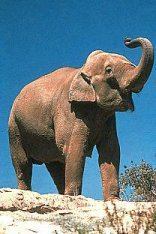 Cultural Importance: Humans use elephants in Asia to log forests, transport heavy loads and carry tourists. Elephants can walk in areas where machines are unable to navigate. About 15,000 Asian elephants are held in captivity as work animals. Elephants are important in Asian folklore and religion. They are believed to be cousins of the clouds and able to cause lightening.
 Evolution is a word saturated with meanings. To some it connotes a progressive diversification of life culminating with Homo sapiens, to some the development of a system or an idea. Charles Darwin described the process as “descent with modification”, and modern biologists define evolution as change with continuity in successive generations of organisms. We know that all animal populations change as time progresses, and that this change is often dictated by the environment. Each newborn generation sees a certain percentage of it’s members live to reproduce. Most of the time the individuals who survive to reproduce are simply a matter of chance, but sometimes an individual wins the genetic lottery and is born with a combination of traits that give it an advantage. If these traits lead to the production of a greater than average number of offspring these advantageous traits will be passed on, and over a number of generations will become common in the population. This process is know as natural selection, and it drives evolutionary change.